
Craven County Probate Court Role
North Carolina does not use a separate local probate court for Craven County. The elected Clerk of Superior Court acts as the probate judge, and assistant clerks may hold many estate hearings. That means probate records are court records kept through the Craven County Clerk of Superior Court, with estate work tied to the courthouse record system.
The probate role covers routine estate administration and many special proceedings. If a will is challenged through a caveat, the dispute can move before a Superior Court judge. That distinction matters for record searches because an estate file may begin as a clerk matter, while a contested will can add Superior Court events, orders, and hearing history.
The official North Carolina estates guidance is the main state source for probate procedure. The local contact path is the Craven County Estates Division. A person looking for probate records should separate estate court files from Register of Deeds records. Deeds, marriage records, birth and death certificates, and recorded real estate instruments are not probate files, even when they relate to the same family or property.
The Judicial Branch wills and estates topic is a useful starting point for statewide estate forms and process terms.
Craven County Probate Contact
Craven County estate records and probate copies are handled at the courthouse through the Estates Division of the Clerk of Superior Court. The county staff directory also links special proceedings to the same division phone number, which fits the North Carolina structure because estates, guardianships, incompetency matters, and other special proceedings often share clerk-level administration.
Craven County Estates Division
Clerk probate office: Clerk of Superior Court acting as ex officio Judge of Probate
302 Broad St
New Bern, NC 28560
Mail: PO Box 1187, New Bern, NC 28563
252-639-3004
Estate staff: 252-639-3005
Monday-Friday, 8:00 AM-5:00 PM
Call before mailing a probate copy request. Staff can confirm whether the file is held in Craven County, whether a case number is needed, what copy or certification cost applies, and which payment forms are accepted for the request.
Craven County Probate Records
Craven County probate records can show the formal steps taken after a death or during a guardianship or special proceeding. Estate files may include a will admitted after death, an application for letters, letters testamentary, letters of administration, inventories, accountings, claims, creditor notices, orders, renunciations, and small-estate papers. Guardianship and incompetency files may include petitions, orders, reports, and other sensitive materials.
Some estate records are public under the clerk record inspection rule, but public access is not the same for every probate-related file. Guardianship and incompetency records can contain medical, financial, family, and capacity details. Those records may be limited, redacted, sealed, or available only to authorized persons depending on the case.
- Will and estate files: wills filed after death, applications, letters, inventories, claims, and accountings.
- Small-estate matters: simplified filings when an estate qualifies for a smaller process.
- Special proceedings: clerk matters that can include estate property and guardianship issues.
- Caveats: challenges to a will's validity that may be heard by a Superior Court judge.
- Guardianships: cases involving authority to act for a minor or adult who needs legal protection.
The Superior Court page is relevant when a probate caveat leaves routine clerk administration and becomes a contested court matter.
Search Craven County Probate Records
Public probate case information may be found through North Carolina eCourts Portal when the matter is indexed online. Smart Search can be used with a decedent name, party name, interested party, personal representative, or case number when those details are available. Online results should be treated as a case summary, not a full substitute for the estate file.
Paper estate files are viewed through the clerk's office in the county where the case is located. For Craven County probate records, that means the Craven County Courthouse. The Judicial Branch court-record help topic says civil, special proceeding, and estates case information can also be accessed on public self-service terminals in clerk offices.
- Start with a decedent name, estate file number, filing year, or representative name.
- Search Smart Search and narrow the location to Craven County when possible.
- Use case type filters for estates, special proceedings, or related probate categories if shown.
- For full paper files, older records, or certified copies, contact the Craven County Estates Division.
- For a will caveat or related Superior Court event, check the case summary for hearings, orders, and linked filings.
| Field Label | Type | Required | Notes |
|---|---|---|---|
| Smart Search | Text | Unspecified | Search by estate party, decedent name where indexed, or case number. |
| Location | Dropdown/filter | Optional | Select Craven County to reduce statewide matches. |
| Case Type | Dropdown/filter | Optional | Use estates, special proceedings, or probate-related categories when available. |
| Filing Date Range | Date range | Optional | Helpful when the estate year is known. |
| Party Name | Text | Optional | May include decedent, petitioner, representative, or interested party. |
| Case Number | Text | Optional | Use the exact file number if available. |
Craven County Estate Process
Probate starts with the person seeking authority to administer the estate. That person usually gathers the death certificate, the original will if one exists, asset information, names of heirs or devisees, and any known creditor details. The Craven County Clerk of Superior Court reviews the filing and determines whether letters should issue.
The process can be simple or complex. A routine estate may move from application to letters, inventory, accountings, claims, and final distribution. A contested estate may involve hearings, orders, and a will caveat. If the validity of a will is challenged, the issue may go before a Superior Court judge instead of remaining only with the clerk.
Craven County probate flow: Collect estate papers › Contact Estates Division › File application and forms › Clerk review › Letters issued › Notice, inventory, claims, accountings › Distribution or contested hearing.
Judicial Branch court-record guidance explains that paper files must be viewed in the county where the case is located.
Craven County Probate Fees
The research did not locate a Craven-only estate filing fee table. Probate filings and copy charges are controlled through North Carolina court-cost and miscellaneous fee schedules, so amounts should be verified with the Estates Division before filing or requesting copies. Do not use the Register of Deeds marriage or vital-record fee schedule for probate court files.
| Probate item | Fee note |
|---|---|
| Estate filing or probate application | Use the North Carolina Judicial Branch court-cost schedule and verify with the Craven Estates Division. |
| Plain court copies | Clerks charge court-copy fees under Judicial Branch fee schedules. |
| Certified court copies | Ask the clerk for the current certification and copy charge before ordering. |
| Letters testamentary or administration copies | Confirm current clerk charges and number of certified copies needed. |
| Register of Deeds copies | Separate office and separate fees, used for deeds, marriage records, and vital records. |
Note: If a filing deadline or estate deadline is close, verify the fee directly with the Estates Division before mailing papers.
What Craven Probate Records Show
A probate search result or estate file can identify the estate and show what actions have been taken. Online case summaries may show only part of the record, while the paper file can hold petitions, inventories, accountings, orders, and letters. Certified copies must come from the clerk when an official seal is needed.
| Field | What it shows |
|---|---|
| Estate caption and file number | The formal estate name and clerk file reference. |
| Decedent name | The person whose estate is being administered. |
| Date filed | When the estate or special proceeding opened. |
| Applicant or petitioner | The person asking the clerk for authority or relief. |
| Representative | Executor, administrator, or other person authorized to act. |
| Letters issued | Authority granted by the clerk and issue date. |
| Events and orders | Inventory, accounting, claim, hearing, caveat, or order entries. |
For estate matters that involve land, the court file and the recorded deed history may both matter. Use the Register of Deeds for recorded instruments and the clerk for the estate file.
Craven County Probate Terms
Probate records use terms that are easy to confuse. These definitions help distinguish the person who died, the person with authority to act, and the type of proceeding shown in a Craven County estate file.
- Testator
- A person who made a will before death.
- Executor
- The person named in a will to carry out estate duties after the clerk grants authority.
- Intestate
- Dying without a valid will, which can lead to administration under North Carolina intestacy rules.
- Guardianship
- A court proceeding that gives a person authority to act for a minor or adult who needs legal protection.
- Conservatorship
- A term often used for financial protection in some states; in North Carolina, related protective matters may appear through guardianship or special proceedings.
- Caveat
- A challenge to the validity of a will that can move the dispute to Superior Court.
Craven County Probate Sources
The North Carolina estates guidance is the official state source explaining that elected clerks act as probate judges.
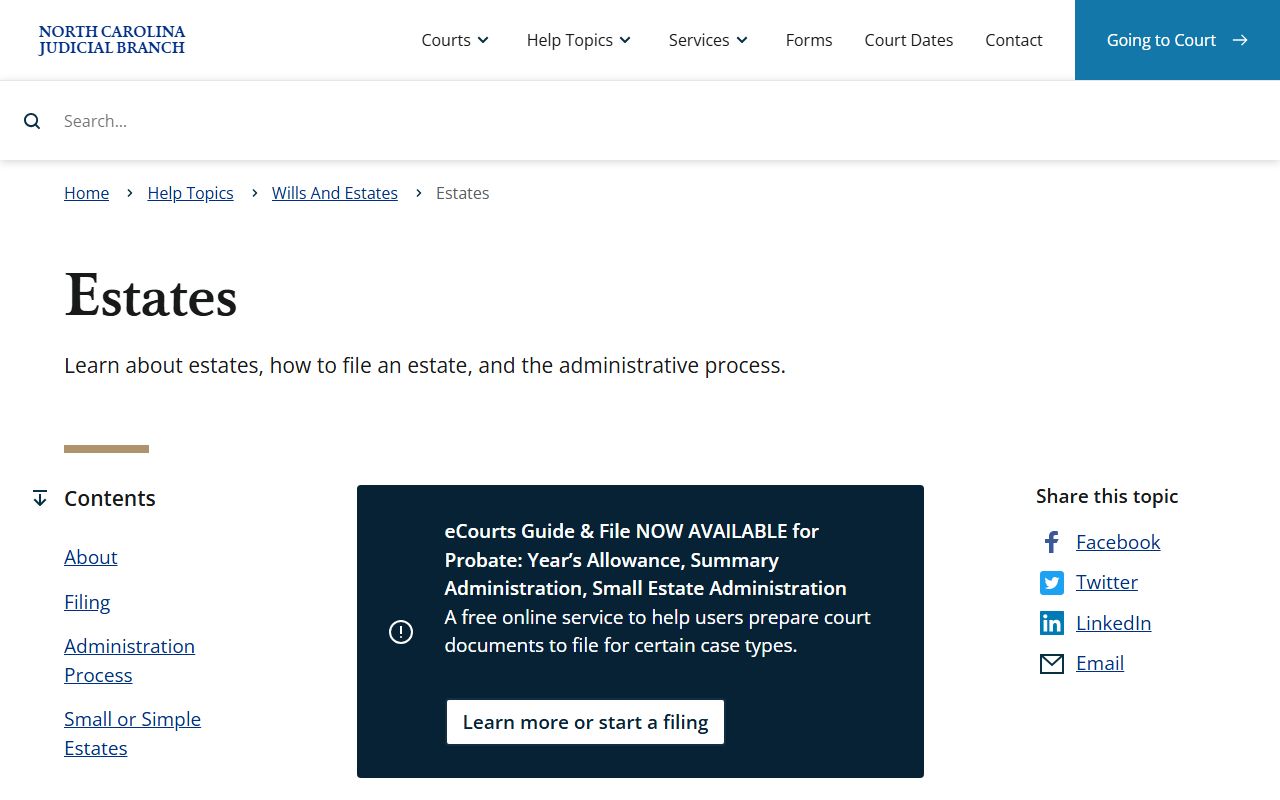
This source supports the local rule that Craven County probate records are handled through the Clerk of Superior Court rather than a separate probate court.
The North Carolina wills and estates topic collects statewide probate forms and estate help topics.
Those forms and topics are useful when preparing an estate filing before contacting the Craven County Estates Division.
The North Carolina Superior Court page gives context for will caveats and other contested matters that may leave routine clerk administration.
When a probate record includes a caveat, the estate file may show both clerk actions and Superior Court proceedings.
Restricted Craven Probate Records
Estate records are often public, but probate-related files are not all open in the same way. Guardianship and incompetency matters may include medical, financial, and personal details. Those materials can be restricted, redacted, or available only to parties and authorized persons.
Sealed records, protected personal information, and sensitive minor information should not be expected in public Portal results. When an online search does not show a document, the next step is to ask the clerk whether the file is public, sealed, paper-only, or restricted by law.