
Craven County Arrest Records and Court Charges
Craven County arrest records are created on the law-enforcement and jail side when a person is arrested, booked, or held. The Craven County Sheriff's Office and Detention Center are tied to that custody record, including the active booking list when a person is currently in county custody. The booking list can show charge language, bond amounts, booking details, and court dates, but it is an early source. It should not be treated as the final court outcome.
Court charges after arrest are different. Once an arrest or citation enters the court system, the District Attorney evaluates the case and the formal charge record appears in the criminal court file. The court charge record tracks the offense name, statute, severity, case number, bond or release entries, first appearance, amendments, reductions, dismissals, and final disposition. For the full case file, plea, sentence, and outcome, use the Craven County criminal court records page.
The Craven County Sheriff's Office page is the source for this arrest records image.
The sheriff source is relevant to the arrest side, while the clerk and portal sources control the court charge side.
Search Craven County Arrest Records and Charges
There is no single official Craven County page that acts as both a final arrest record search and a complete court charge database. Use a two-part search. For current custody and booking data, use the Craven County active bookings list through the detention center resources. For formal charges and case status, use the NC eCourts Portal and filter to Craven County. If the charge is too new to appear in the court case summary, the jail booking list or direct clerk contact may fill the timing gap.
- Check current custody through the Craven County active bookings list when the person may still be in jail.
- Search the NC eCourts Portal by defendant name, case number, citation, or docket number.
- Use Craven County as the location filter and review each charge count separately.
- Read the charge status, hearing history, bond, disposition, and financial entries rather than stopping at the first charge label.
- Call the Clerk of Superior Court at 252-639-3000 when an online charge entry is missing, unclear, or needs a certified copy.
Statewide criminal offender data is separate. The North Carolina Department of Adult Correction offender search covers state prison, probation, parole, and historical offender data back to 1972, while the SBI sex offender registry covers registry records. Neither one replaces the Craven County court charge record.
Craven County Charges After Arrest
Charges after arrest reach the court through a charging document or criminal process. North Carolina practice can involve a citation, warrant, magistrate process, criminal summons, information, or indictment depending on the offense and procedural stage. In practical record terms, the reader should look for the charge wording, statute, offense date, case number, court division, bond or release entry, and whether the charge has been amended, reduced, dismissed, or superseded by a later filing.
| Charging Document | Common Role | What to Check in the Record |
|---|---|---|
| Complaint or Criminal Process | Often tied to the first filed accusation, citation, summons, warrant, or magistrate action. | Offense wording, date, agency, case number, bond, and first appearance. |
| Information | A prosecutor-filed charging document used in some criminal proceedings. | Whether it replaces or clarifies earlier charge language. |
| Indictment | A grand-jury felony charging document used in Superior Court matters. | Whether the felony charge moved from initial proceedings into Superior Court. |
The Sheriff Chip Hughes biography page is the source for this image.
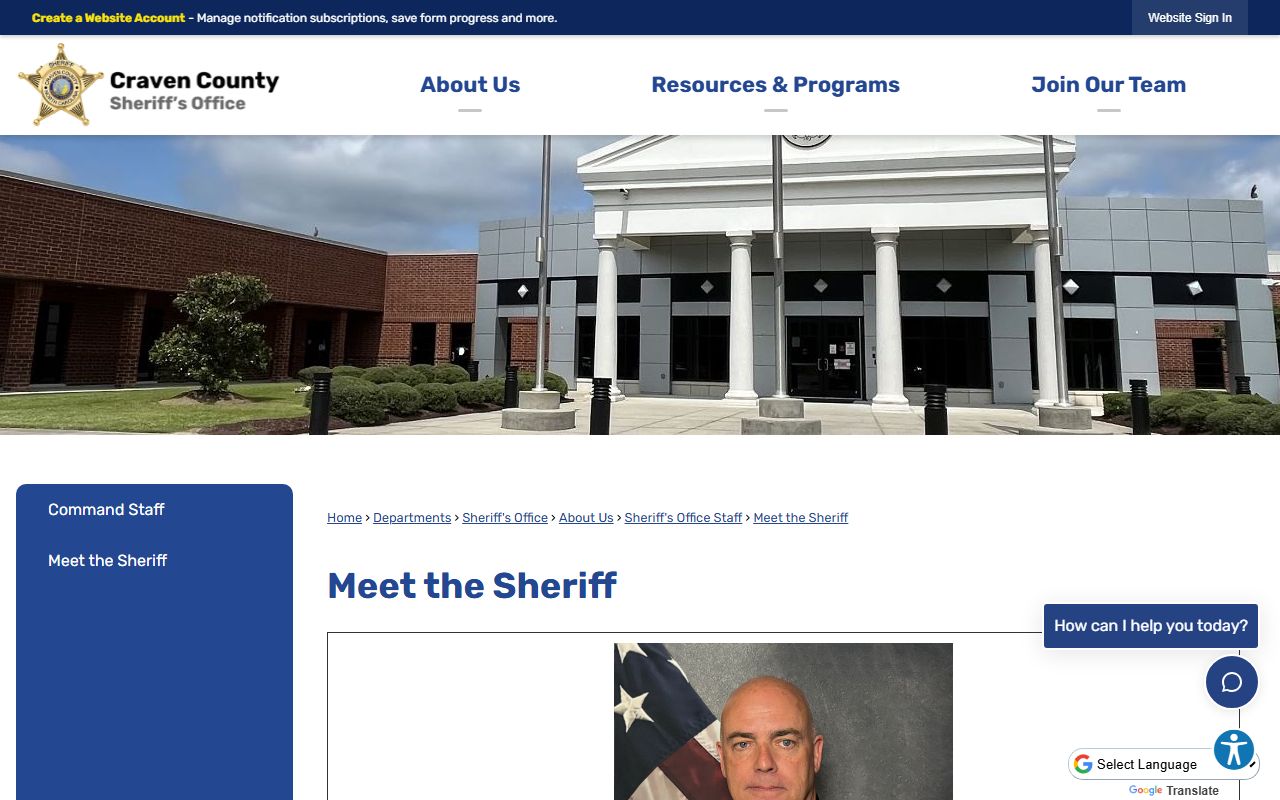
The sheriff's office is central to arrests and service of process, but prosecution decisions appear through the DA and the court record.
Craven County Charge Status Terms
Charge status is the most important field after the charge name. One arrest can produce several counts, and each count can have a different status. A charge may begin as pending, later be amended or reduced, be dismissed, be superseded by indictment, or end in a conviction. The District Attorney's office can affect amendments, dismissals, pleas, deferred prosecution, and sentencing terms, while the judge or court enters the official disposition.
| Status | What It Means | Why It Matters |
|---|---|---|
| Pending | The charge is still active and unresolved. | Check the next hearing date and bond or release conditions. |
| Amended | The charge wording, count, or level has changed. | Compare the original charge with the current charge before drawing conclusions. |
| Reduced | The charge has been lowered to a less serious offense or category. | The final conviction, if any, may differ from the arrest charge. |
| Dismissed | The court record shows the charge was not pursued to conviction. | Read whether dismissal is with prejudice, without prejudice, or tied to another count. |
| Superseded by Indictment | A later indictment replaces or carries forward the felony accusation. | Search the Superior Court case record for the updated charge path. |
| Disposed | The charge has a recorded outcome. | Review the plea, verdict, sentence, costs, and probation entries. |
Booking Records vs Court Charge Records
The Craven County Detention Center active bookings list is useful soon after an arrest because it can show current jail custody, charge wording, bond, and court dates. It excludes juveniles and federal inmates. It also does not serve as a final judgment record. A person can be booked on an initial charge, then later have the charge amended, reduced, dismissed, or replaced in court. The court record is the source for the formal charge path and outcome.
| Comparison Point | Booking or Arrest Record | Court Charge Record |
|---|---|---|
| Primary Office | Sheriff's Office and Detention Center. | Clerk of Superior Court and trial court. |
| Main Purpose | Shows custody and booking information. | Shows formal accusations and court status. |
| Timing | Often appears shortly after booking. | Updates as the case moves through court. |
| Outcome | Usually does not prove the final result. | Shows disposition, plea, sentence, or dismissal when entered. |
Craven County Charges vs Convictions
An arrest record or charge list should not be read as proof of guilt. A charge is the accusation filed after arrest or citation. A conviction is a guilty plea or finding of guilt accepted by the court. Craven County court charge records can include charges that were dismissed, reduced, amended, or resolved without conviction. The disposition field and sentencing entries show the outcome.
| Comparison Point | Charge | Conviction |
|---|---|---|
| Legal Meaning | An accusation or count in a court case. | A court-accepted guilty plea or finding of guilt. |
| Record Timing | Appears early and may change. | Appears after disposition or judgment. |
| Can Be Removed | May be dismissed, superseded, sealed, or expunged if eligible. | May be subject to appeal or expunction if the law allows. |
| How to Verify | Check current charge status and docket events. | Check disposition, sentence, and final judgment entries. |
Craven County Charge Codes and Severity
Craven County charge records may show the offense name, statute, count number, and severity level. District Court handles many misdemeanors, infractions, traffic matters, initial proceedings, and magistrate-connected criminal processes. Felonies may move into Superior Court for indictment, plea, trial, or sentencing. Traffic and infraction records are court records, but a driver record from the DMV is a separate file.
Some charge entries also connect to money or release data. Bond can appear in court and jail records, and financial entries can include costs, fines, restitution, criminal attorney fees, or probation-related fees when applicable. Online payment availability does not mean every charge can be paid away. Non-waivable offenses, criminal traffic matters, and felony cases may require court appearance or counsel.
Note: One arrest can create several separate counts, and each count can have its own final status.
Public Access to Craven County Arrest Records
Public access depends on which record is being requested. Court charge records are generally accessed through the eCourts Portal, public self-service terminals, and the Craven County Clerk of Superior Court under the clerk record access rule in N.C. Gen. Stat. § 7A-109, unless another law restricts the file. Broad public-records law appears in N.C. Gen. Stat. § 132-1.
Law-enforcement records follow a different path. Sheriff incident, arrest, detention, and custody records may be requested through sheriff or county channels when public, but active investigations, sealed warrants, juvenile records, victim-sensitive details, and confidential information may be withheld. The Sheriff's Patrol page states that the Patrol Bureau serves criminal and civil processes, arrest warrants, domestic violence orders, subpoenas, and child-support orders.
The Craven County Sheriff's Patrol page is the source for this image.
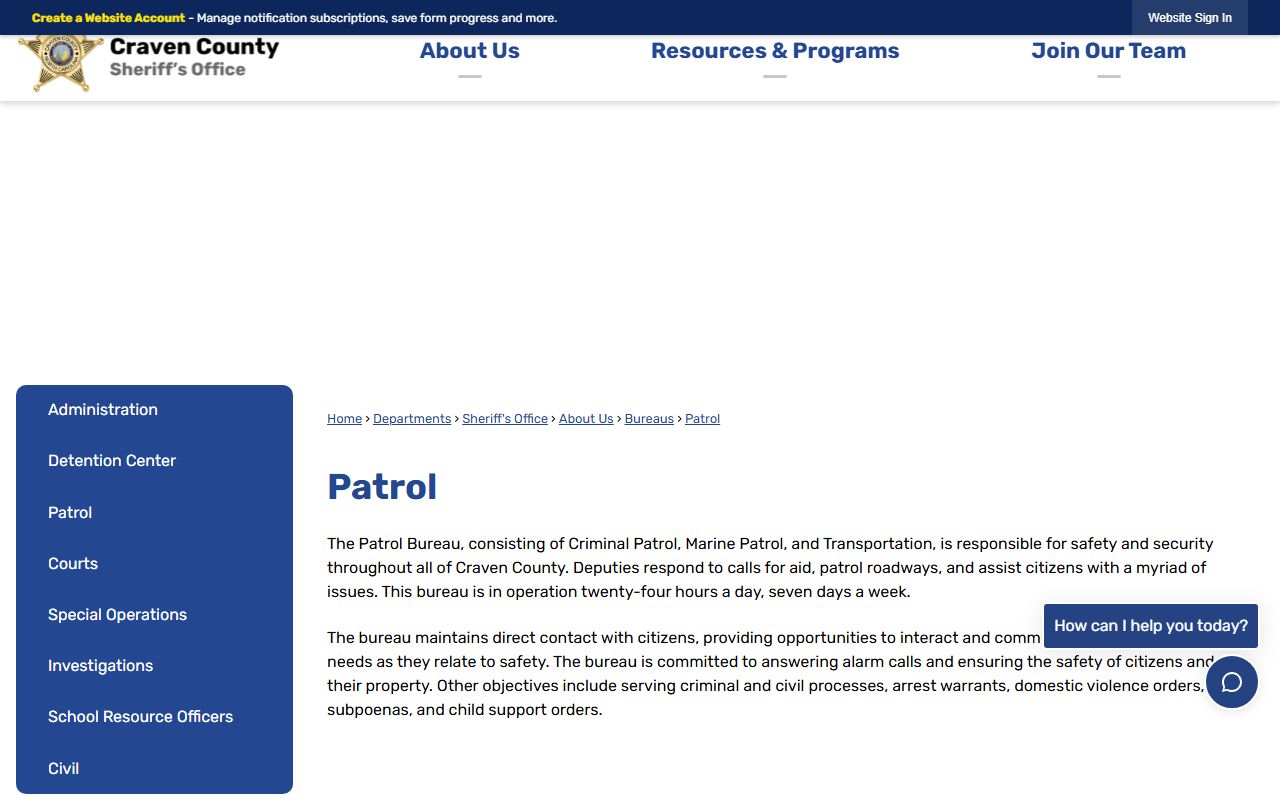
The patrol source connects arrest records to warrant service and criminal process, which can later appear in court charge records.
Restricted Craven County Charge Records
Juvenile charge records are confidential in North Carolina and are not ordinary public arrest or court charge records. Sealed records remain in court custody but are hidden from public inspection unless a judge or statute permits access. Expunged records are removed from ordinary public view after a court grants an eligible petition. Public searches may also hide Social Security numbers, dates of birth, financial account numbers, protected addresses, medical details, and victim-sensitive information.
| Comparison Point | Sealed | Expunged |
|---|---|---|
| Public Search | Hidden or restricted by order or statute. | Removed from ordinary public results after the order is processed. |
| Record Status | Still exists under limited access. | Covered entries are suppressed or removed by listed agencies. |
| Typical Basis | Confidential category, safety issue, or judge's order. | Specific North Carolina expunction statute and court order. |
| Where to Start | Clerk or attorney for access authority. | Clerk of Superior Court in the county of the charge, using official forms. |