
Craven County Criminal Court Records
A Craven County criminal court record is the case-level file kept by the Clerk of Superior Court after a criminal case opens. It may begin with a citation, warrant, magistrate action, complaint, or indictment, then grow as the case moves through hearings, motions, pleas, trial settings, dispositions, sentencing, costs, restitution, and appeal entries. The full criminal file is broader than the initial charge list because it shows what the court did with the accusation.
North Carolina's court hierarchy matters. District Court handles many misdemeanors, infractions, traffic matters, first appearances, magistrate-related criminal process, and lower criminal proceedings. Superior Court handles felony criminal cases, serious trials, pleas, sentencing, and certain appeals from District Court. Craven County is in Prosecutorial District 4, Superior Court District 4, and District Court District 4. The District Attorney, listed in the local contact directory at 252-639-3010, prosecutes state criminal cases, while the Clerk of Superior Court maintains the court file and public access channels.
Search Craven County Criminal Court Records
Use the NC eCourts Portal for public criminal case summaries, records, hearing dates, judgments, and eligible payments. Smart Search can search by case number, defendant name, attorney, citation, docket number, and other fields. Search Hearings can be used when the main goal is the next court date. Public users do not need registration to search public information, but registration can save cases. Elevated access is limited to users with statutory authority and verified need.
- Open Smart Search and enter the criminal case number if known, or search by defendant name with Craven County as the location filter.
- Use Advanced Filtering Options to narrow by case type, status, filing date range, party criteria, or date of birth when available and permitted.
- Open the case summary and review the case events, hearings, charges, dispositions, financial entries, and public documents.
- Use Search Hearings to confirm the next criminal court date, courtroom, judicial officer, and hearing type.
- Contact the Clerk of Superior Court when a certified copy, paper file, older record, or public terminal search is needed.
For the narrower accusation and charging-document path, use the companion Craven County arrest records and court charges page. For custody status, use the sheriff and jail channels rather than treating the criminal case file as a jail roster.
Craven County Criminal Case Flow
Criminal court records read more clearly when the case is viewed as a sequence. A charge may start with an arrest, citation, warrant, or magistrate action. The court record then tracks appearances, bonds, pleadings, motions, hearings, dismissal or amendment decisions, plea negotiations, trials, verdicts, sentencing, and financial obligations. Felony matters may begin in lower proceedings and move to Superior Court for indictment, plea, trial, or sentencing.
Case flow: Charges Filed › First Appearance or Arraignment › Pretrial and Motions › Plea or Trial › Disposition › Sentencing › Appeal or Compliance
| Stage | What Happens |
|---|---|
| Charges Filed | The accusation enters the court system by citation, warrant, complaint, information, or indictment. |
| First Appearance or Arraignment | The court addresses the charge, counsel, bond or release, and plea-related steps. |
| Pretrial and Motions | The record may show continuances, discovery disputes, suppression motions, bond changes, or plea talks. |
| Plea or Trial | The defendant may enter a plea, go to trial, or receive a verdict from the court or jury. |
| Disposition | The charge is resolved by guilty plea, verdict, dismissal, reduction, or another court outcome. |
| Sentencing | The court records punishment, probation, restitution, fines, costs, credit, or other conditions after conviction. |
What Craven County Criminal Records Show
A criminal court record can include both basic index fields and detailed case activity. The court file may show the defendant, prosecutor, defense attorney, charge language, offense date, court date, bond, plea, motion history, orders, verdict, sentence, probation terms, restitution, fines, court costs, and appeal entries. DOB and other sensitive details may be hidden from public view, and juvenile, sealed, expunged, adoption, and mental-health records are handled under stricter rules.
| Field | What It Shows |
|---|---|
| Case Number | The official criminal file number, often coded by year, case type, sequence, and county identifier. |
| Defendant | The person charged, with public identifying details limited by redaction rules. |
| Charges | The offense description, statute or code reference, level, count, and status where public. |
| Prosecutor and Counsel | District Attorney and defense attorney information when shown in participant data. |
| Bond or Release | Bond amount, type, conditions, or release information if included in the public case data. |
| Hearings | Dates, times, hearing types, courtrooms, and judicial officers for criminal settings. |
| Plea and Verdict | How the defendant answered the charge and whether the charge ended by plea, trial, or dismissal. |
| Disposition | The official outcome for each charge, such as guilty, not guilty, dismissed, reduced, or otherwise resolved. |
| Sentence | Probation, confinement, restitution, fines, costs, conditions, and compliance entries after conviction. |
The NC SBI sex offender registry is the source page for this related criminal records image.
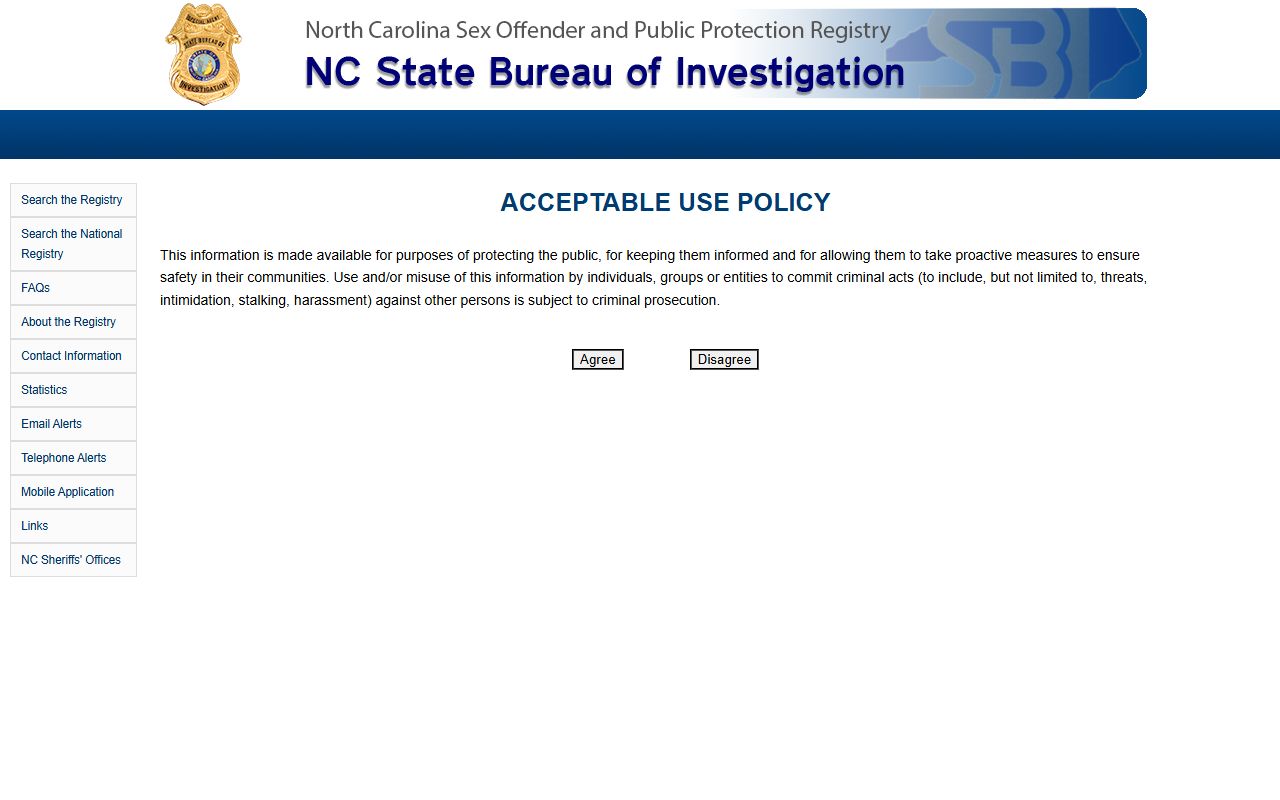
The registry is not the court file, but it is a separate state record source that may relate to some criminal convictions.
Craven County Charges vs Convictions
A criminal court record can show charges that never became convictions. A charge is an accusation. It may be amended, reduced, dismissed, superseded by indictment, resolved by plea, tried to a verdict, or removed from public view if an expunction is later granted. A conviction is a guilty plea or finding of guilt entered by the court. Reading only the charge title without the disposition can misstate the outcome.
| Comparison Point | Charge | Conviction |
|---|---|---|
| Meaning | An allegation filed in the court case. | A finding or plea of guilt accepted by the court. |
| When It Appears | Early in the case, sometimes before final review. | After plea, verdict, or other adjudication. |
| Can Change | May be amended, reduced, dismissed, or superseded. | May be appealed, corrected, or affected by later relief. |
| How to Read | Check each count and current status. | Check sentence, probation, costs, and final judgment entries. |
Read Craven County Criminal Dispositions
Disposition entries explain what happened to the charge or case. Common criminal record terms include guilty, not guilty, dismissed, dismissed with prejudice, dismissed without prejudice, plea, conviction, sentence, probation, restitution, bond, surety, and continuance. A dismissal with prejudice means the matter is dismissed permanently. A dismissal without prejudice may leave room for refiling if the law allows it. A continuance means the case was postponed, not ended.
Financial entries are also part of many criminal court records. The eCourts Portal can support payment of eligible costs and fees, restitution, criminal attorney fees, fines, and probation or parole fees. It does not handle every court-related payment category. The cashier/bookkeeping contact in Craven County is 252-639-3001, and the main clerk number is 252-639-3000.
Note: Always read the final disposition and sentence, not just the original charge listed near the start of the file.
Sealed and Expunged Criminal Records
Sealed and expunged records are not the same. Sealing restricts public access to a court record that remains in court custody. Expunction removes qualifying criminal records from ordinary public access after a court grants relief under a specific statute. North Carolina expunction law includes several paths, and eligibility depends on the charge, disposition, prior record, waiting period, offense class, prosecutor review, and judge's order.
| Comparison Point | Sealed | Expunged |
|---|---|---|
| Public View | Hidden or restricted from public inspection. | Removed from ordinary public access after an order. |
| Court Custody | The record still exists under restricted access. | Covered agencies remove or suppress the ordered entries. |
| Authority | Requires a statute, rule, or judge's order. | Requires a qualifying expunction statute and court order. |
| Craven Filing Point | Filed or addressed through the court where the case is located. | Usually filed through the Craven County Clerk of Superior Court for Craven cases. |
Public Access to Craven County Criminal Records
The public access rule for clerk-maintained court records is N.C. Gen. Stat. § 7A-109, which says clerk records are open for public inspection during regular office hours unless prohibited by law. The broader public-records definition appears in N.C. Gen. Stat. § 132-1. Criminal case data can be viewed online where public, on clerk self-service terminals, or through paper file inspection in the county where the case is located.
Criminal background checks are a different use case from casual case lookup. Court records may be incomplete or out of date if they are copied from a source at the wrong time, and expunction orders can change what should be visible to the public. FCRA-regulated screening for employment, housing, credit, insurance, or similar decisions must use compliant screening procedures rather than informal case searches.
Restricted Craven County Criminal Records
Juvenile criminal matters are not ordinary public criminal court records. The Judicial Branch explains that juvenile delinquency records are confidential and access is generally limited to authorized people. Public users should also expect restrictions for sealed cases, expunged cases, protected victim information, protected addresses, Social Security numbers, medical information, and mental-health material.
Practical expunction work starts by identifying the exact Craven County charge, disposition, and statute that might authorize relief. The petition is usually filed in the county where the charge or conviction occurred. For some nonviolent misdemeanor and felony convictions, N.C. Gen. Stat. § 15A-145.5 is relevant, while Chapter 15A, Article 5 contains multiple criminal-record expunction procedures.
The North Carolina juvenile delinquency records guidance is the source page for this criminal records image.
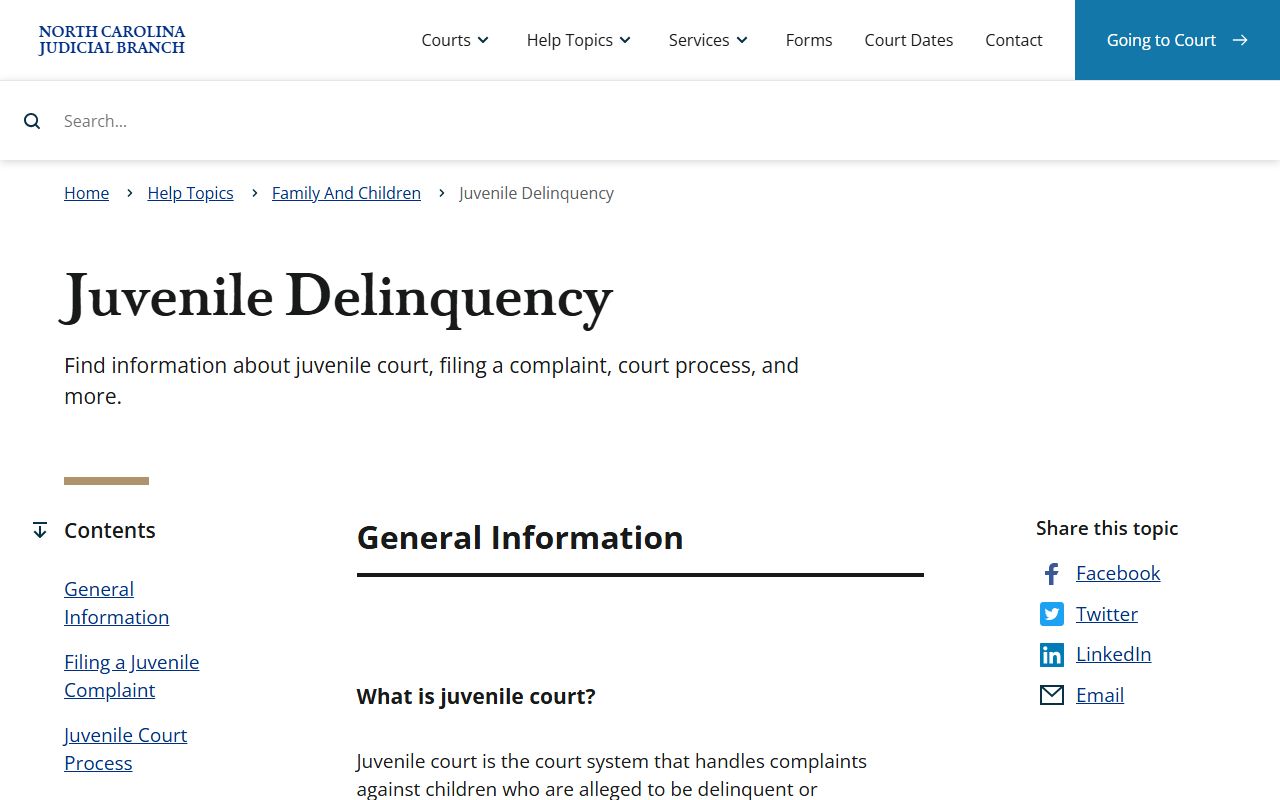
Juvenile access limits are a key exception to the normal public criminal court record search path.